An old Seoul neighborhood where past meets present.
82notes #0002 (N)
안녕 (Hi)
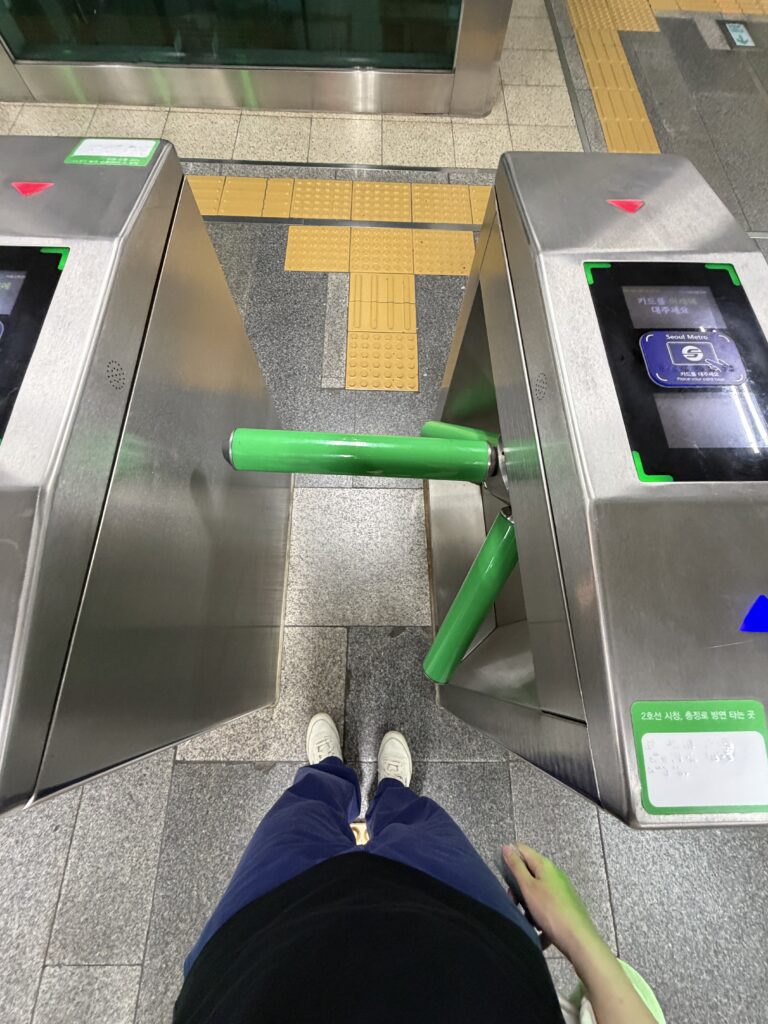
Getting out the door is half the battle.
Off to Euljiro.
I usually take the subway when I’m heading to Seoul. It’s just the easiest way to get around. There are so many cars that if you get caught in rush hour, traffic can be pretty bad. If it’s your first time in Korea, the subway might feel a little confusing. I’ve had 25 years to figure it out, so I’m fine now. (I still get confused when I travel abroad though. 🤯 I guess we’re all the same.)
You’ve probably heard of Myeongdong. (Every time I go, I hear more foreign languages than Korean.) Euljiro is right next door, but it feels like a completely different neighborhood. Old printing shops and hardware stores are still around, while cafés and independent shops have quietly settled in between them. It feels nothing like places such as Seongsu or Hannam, two of Seoul’s most popular neighborhoods for cafés, shopping, and lifestyle spots. It’s one of the few neighborhoods where old Seoul and a newer side of the city exist at the same time.
That’s probably why I keep coming back. There are so many spaces here that don’t try to hide their age. The old, the worn, the slightly imperfect… they’re all part of the charm. Whenever I’m in the mood for places with a bit more character, I somehow end up in Euljiro. If you’d like to see an older side of Seoul without giving up good cafés and beautiful spaces, I’d start here.
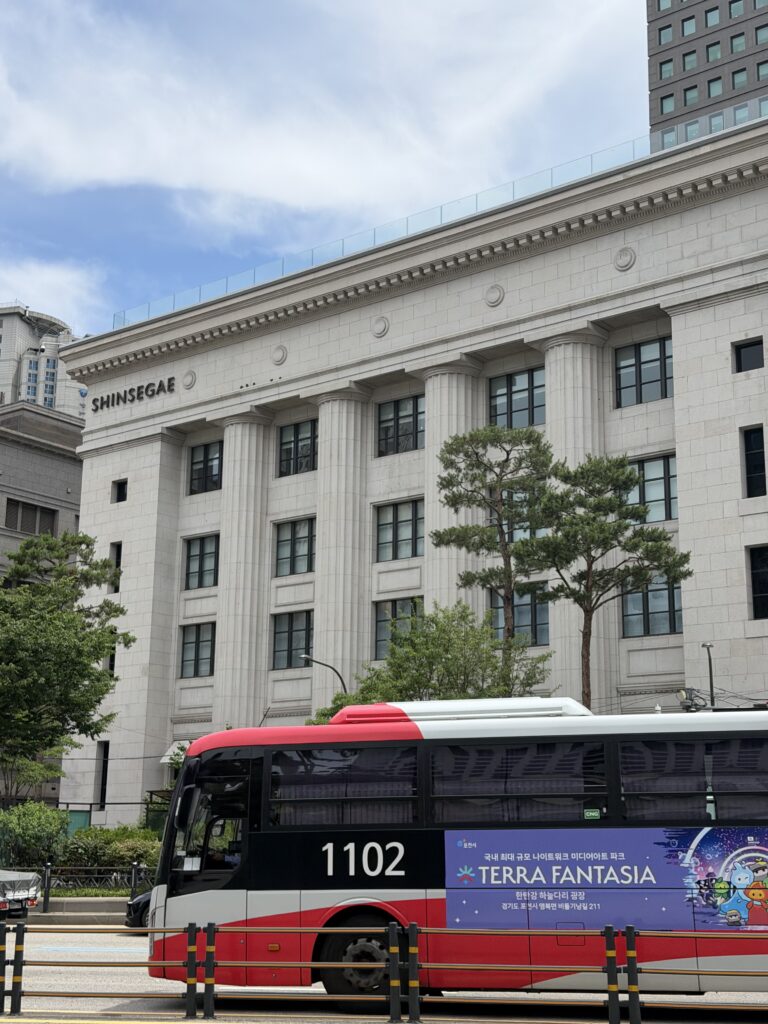
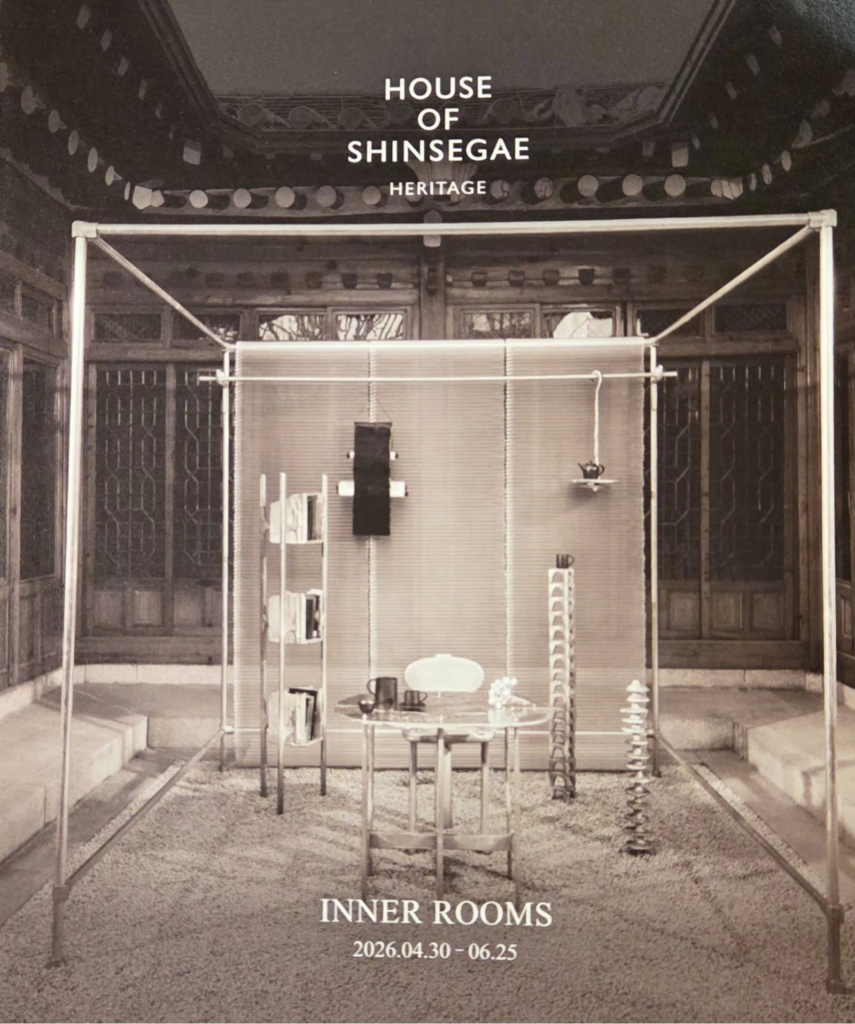
Didn’t expect to find a Chanel downstairs.
Before heading to Euljiro, I made a quick stop at Hoehyeon Station for an exhibition.
It was called The Inner Room, presented by Shinsegae, one of Korea’s largest retail companies. The building recently opened to the public, and I heard they’ll be holding exhibitions here regularly. If you’re around when one’s on, I’d definitely stop by. Honestly, the building is worth seeing just as much as the exhibition itself.
Around this neighborhood, you’ll also notice quite a few buildings from the Japanese colonial period. I’ll save those for another post. (For the architecture people. 🙂)
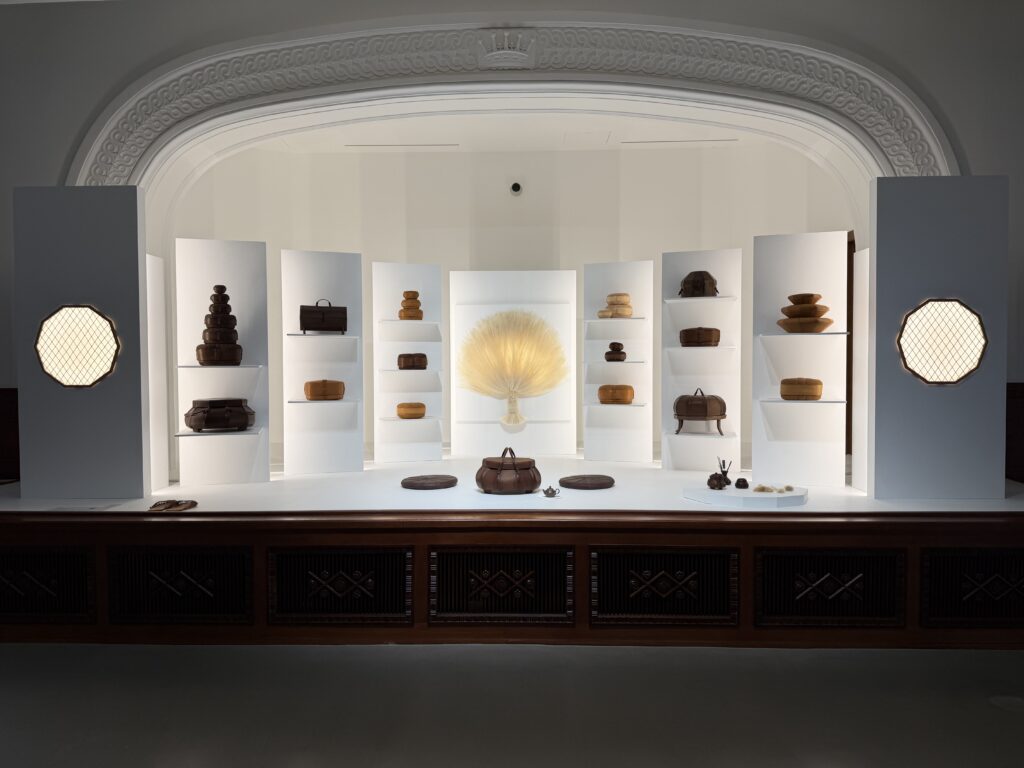
My favorite shot. from “The Inner Room”
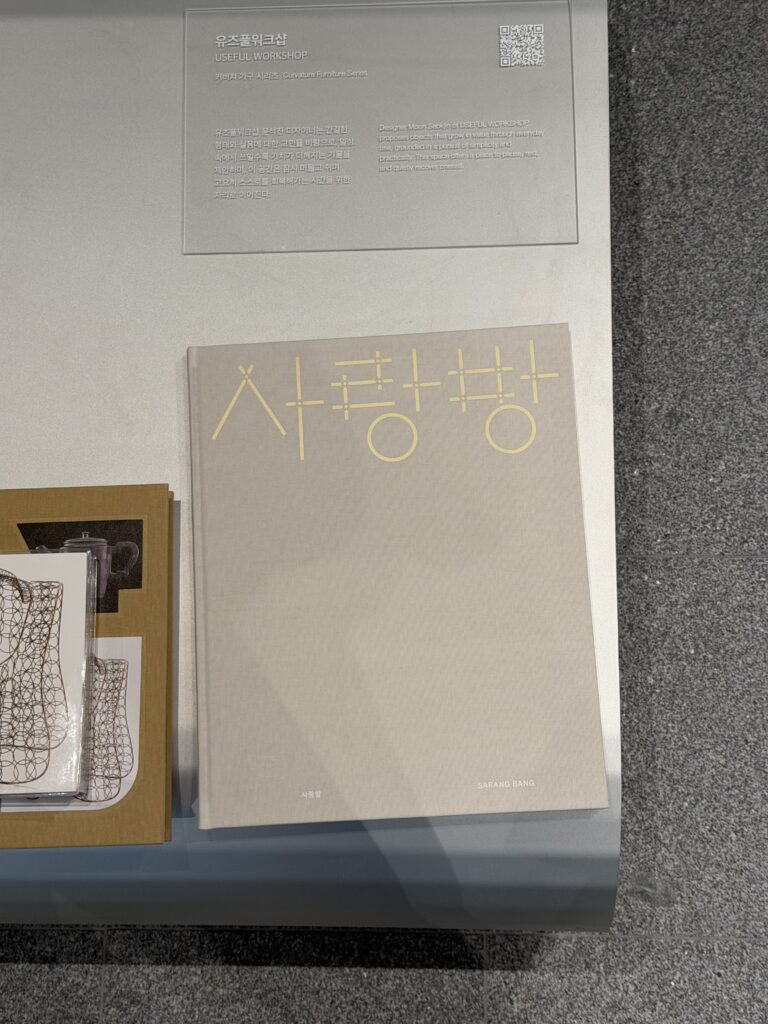
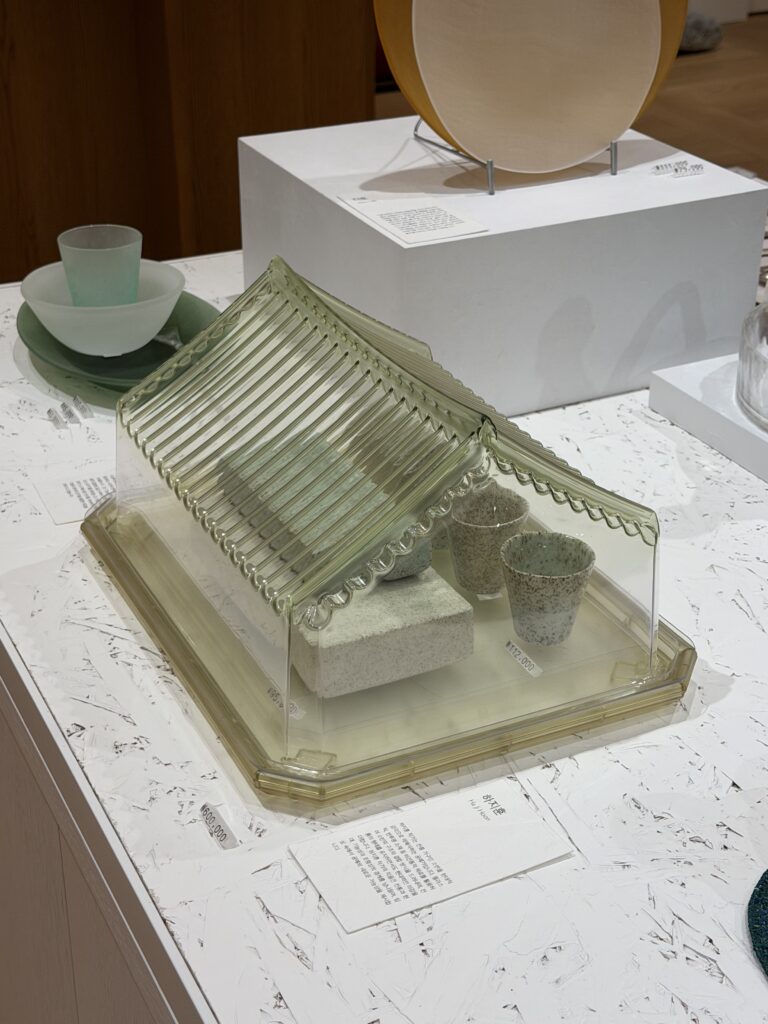
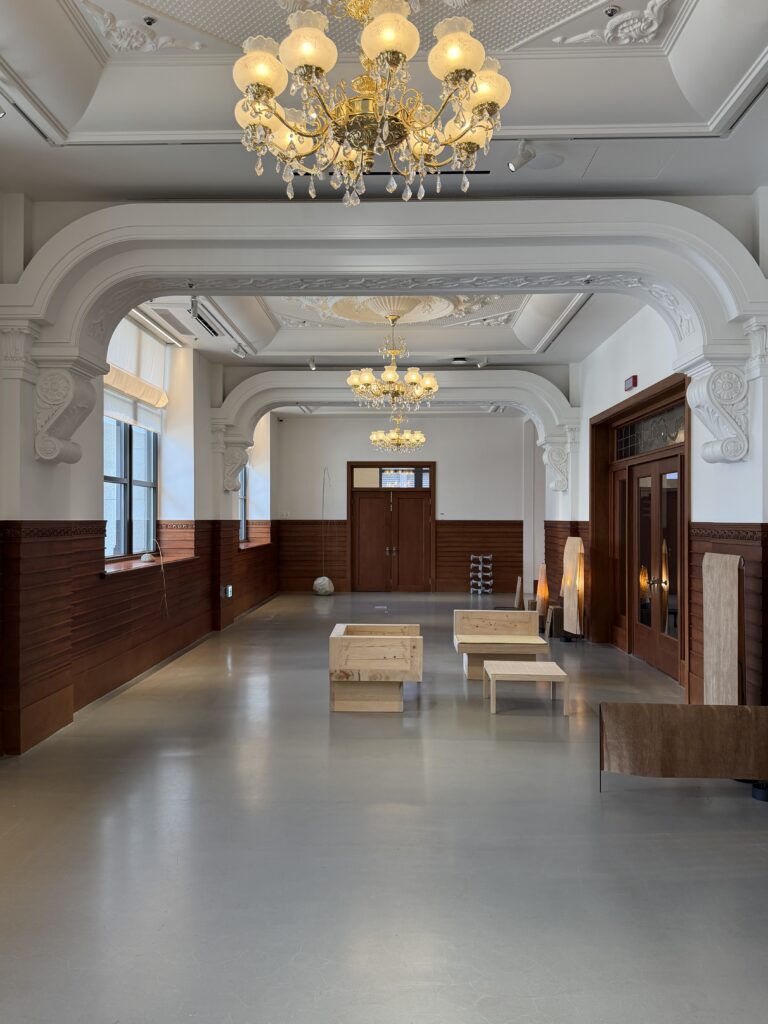
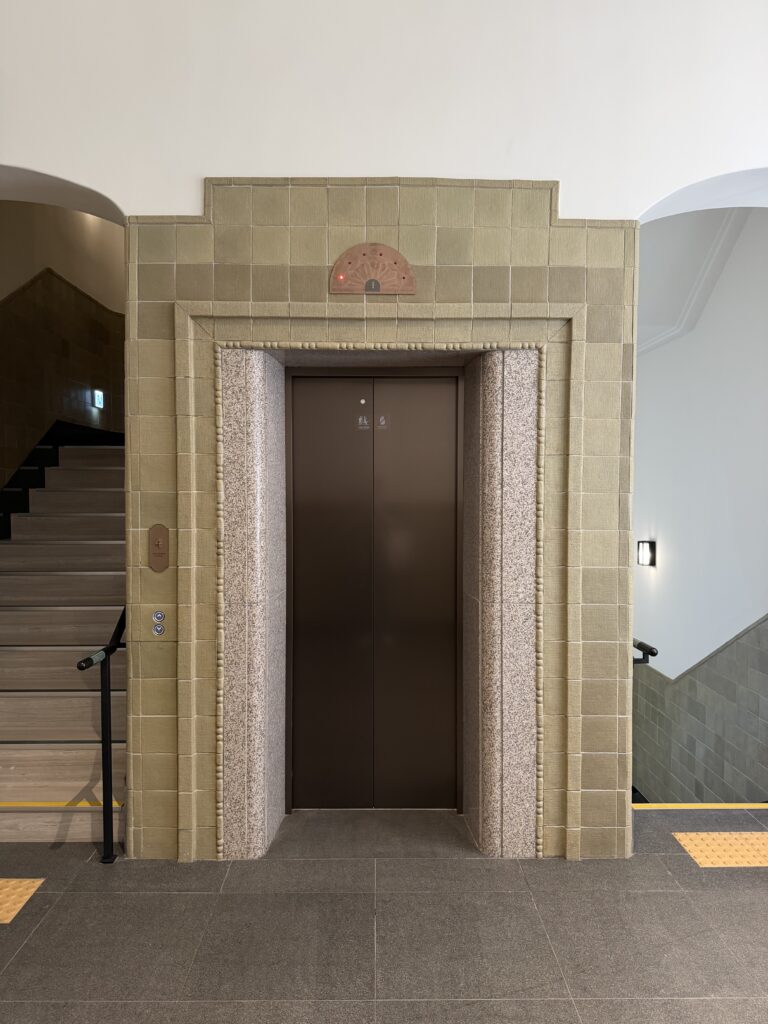
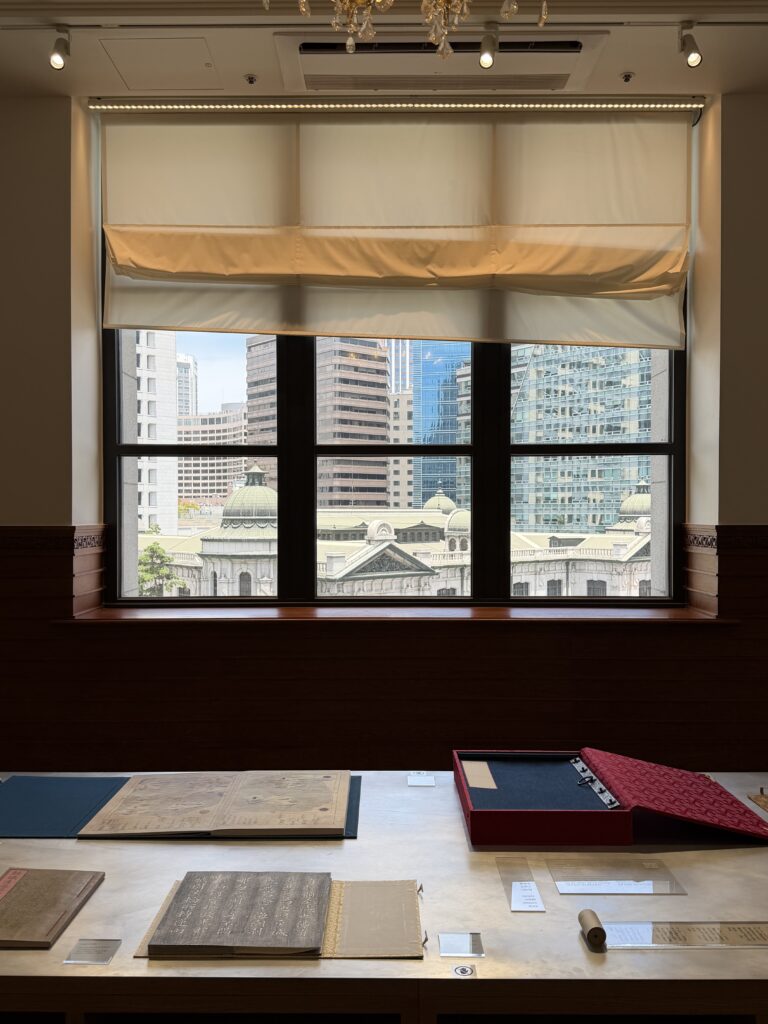
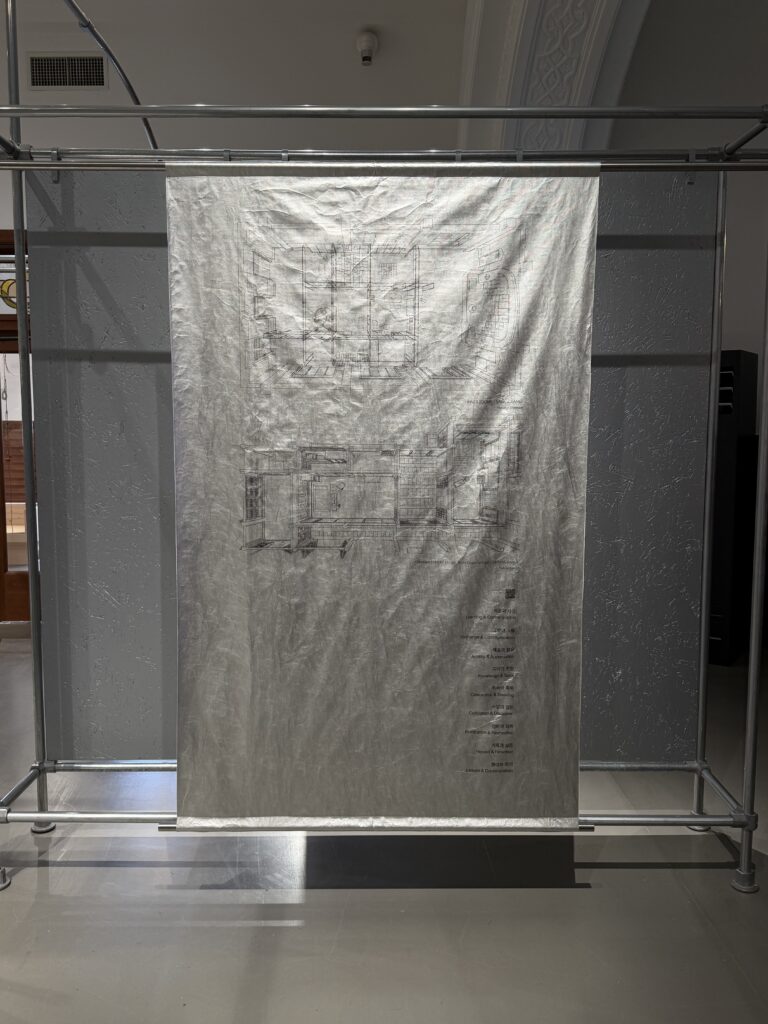
+ My favorite shot. (The full story’s in the next note.)
The Inner Room was inspired by the sarangbang, a traditional room in Korean homes. The word sarangbang literally combines “sarang” (love) and “bang” (room). (A “love room”… not quite. 😂) Despite the name, a sarangbang wasn’t about romance. It was a space where people welcomed guests, shared conversations, and expressed their taste through furniture, objects, and books. Since the exhibition was built around the idea of a room, every space felt different. Each one had its own atmosphere, with traditional furniture and objects interpreted in different ways.
As much as I enjoyed the exhibition, I think I was even more fascinated by the building itself. The Heritage opened in 2025, but the building’s history goes back much further. It was originally completed in 1935 as the Joseon Savings Bank, later designated as a cultural heritage site, and eventually restored by Shinsegae before reopening to the public. Being able to experience an exhibition inside a building that’s been standing for nearly a century made it feel even more special. If you’d like to learn more about the exhibition itself, I wrote a separate note called “The Inner Room: A Closer Look.” (It’s the next note, so you won’t have to scroll very far.)
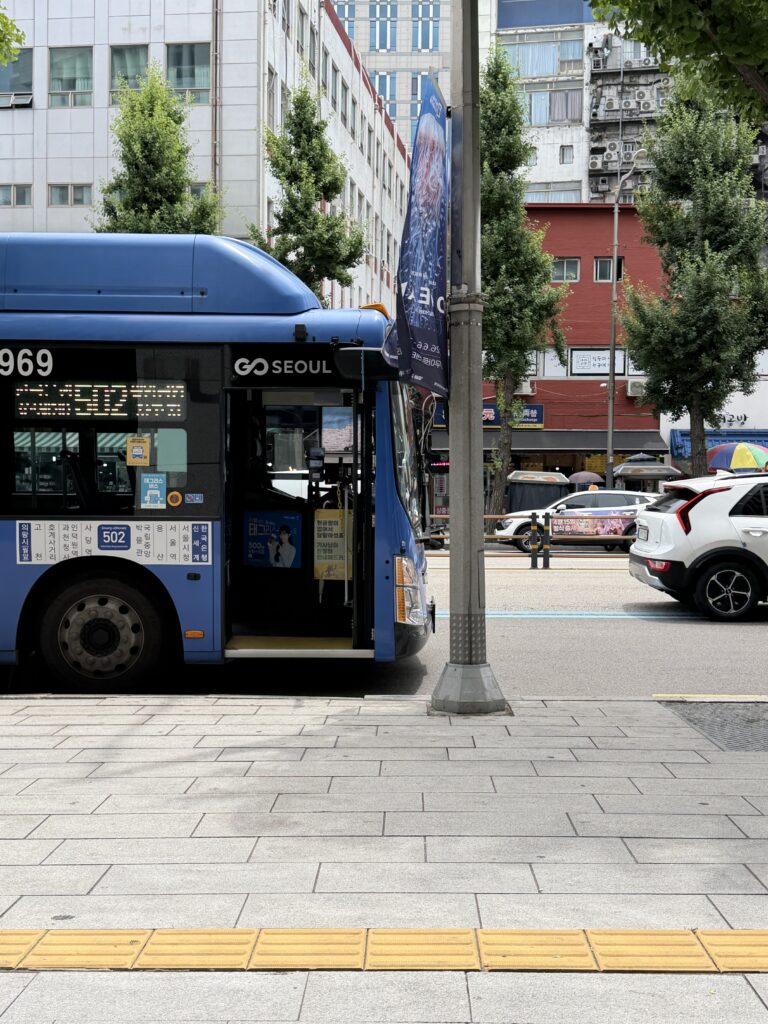
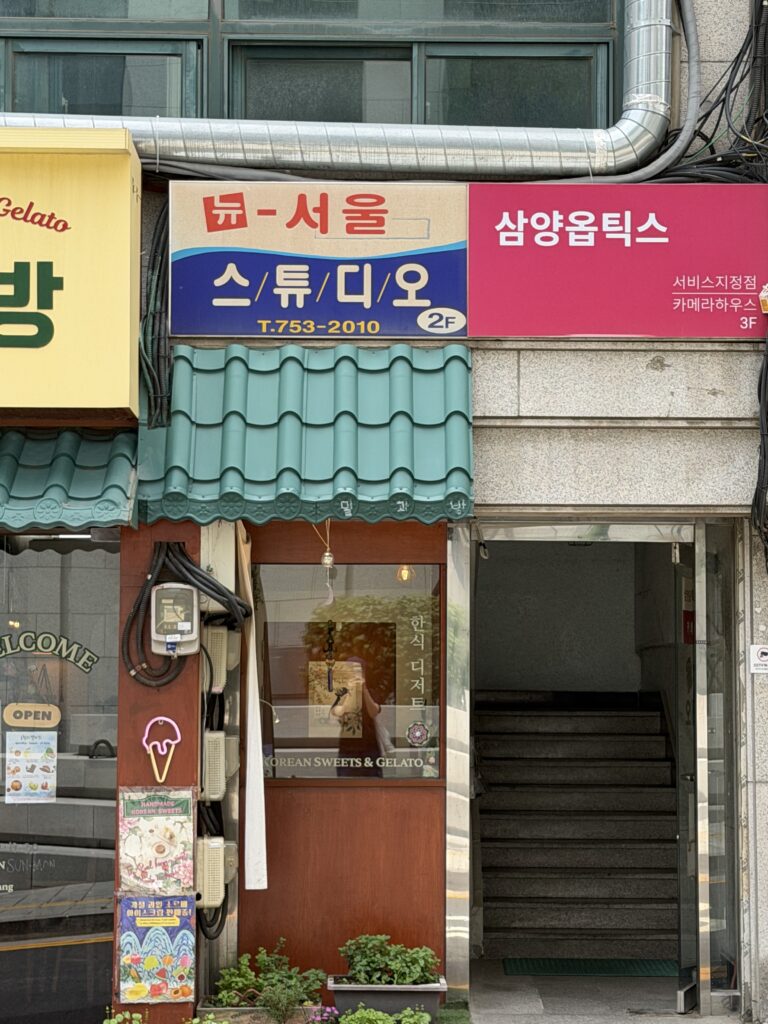
Locals usually walk right past this.
I took these on the way to lunch after the exhibition. A Seoul city bus, and one of those old signs you still come across every now and then. You probably can’t read it, but it says “New Seoul Studio.” (From the look of it, I’d guess it’s been around since the 1970s. I love finding signs like this.)
Ever since I started this blog, I’ve been making a conscious effort to notice the more Korean side of everyday life. Funny enough, I think I’m the one learning the most. Streets I would’ve walked past without a second thought suddenly feel different once I have a camera in my hand. There are so many little details I would’ve missed before. (Life has somehow become much busier… in a good way.)
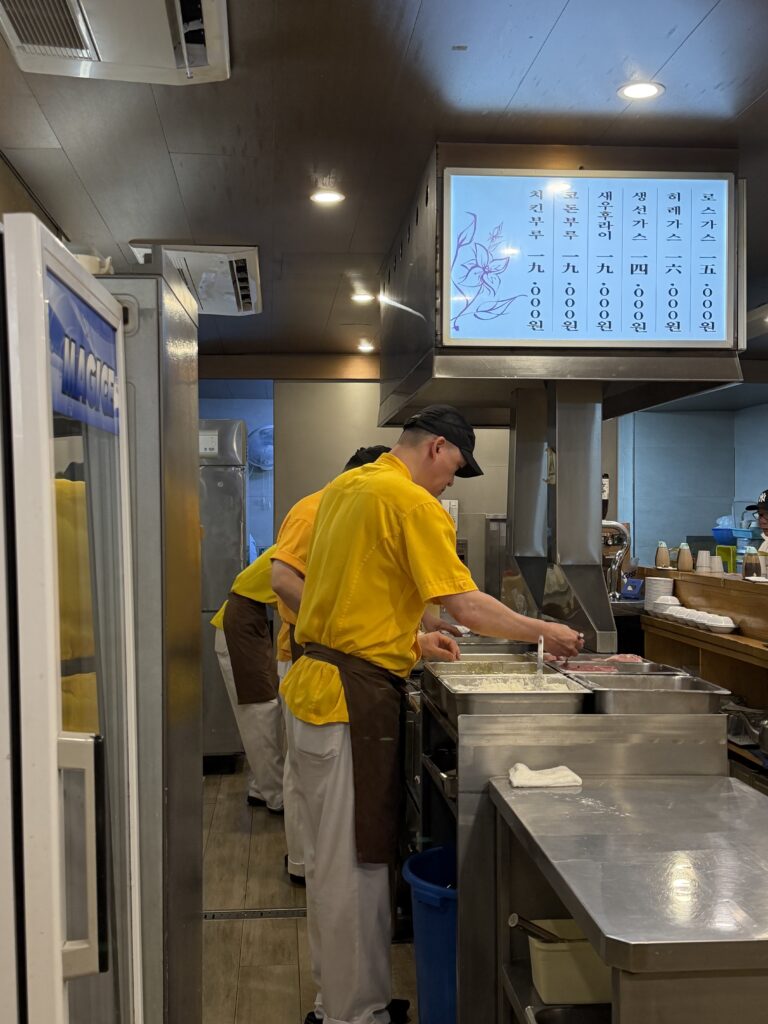
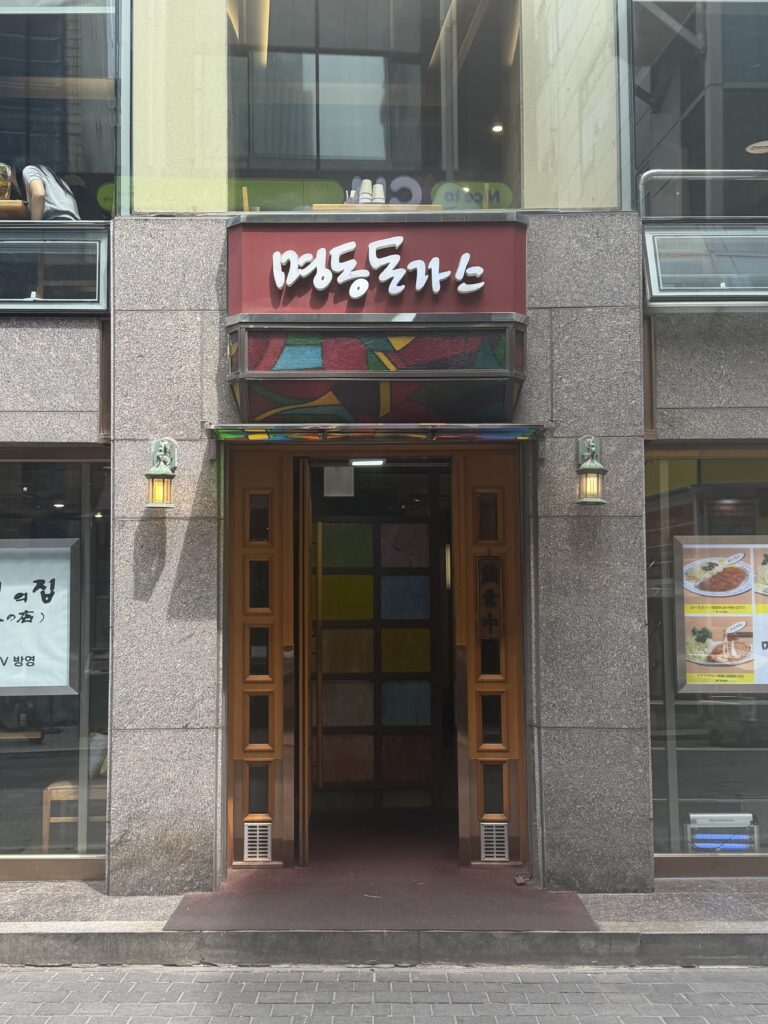
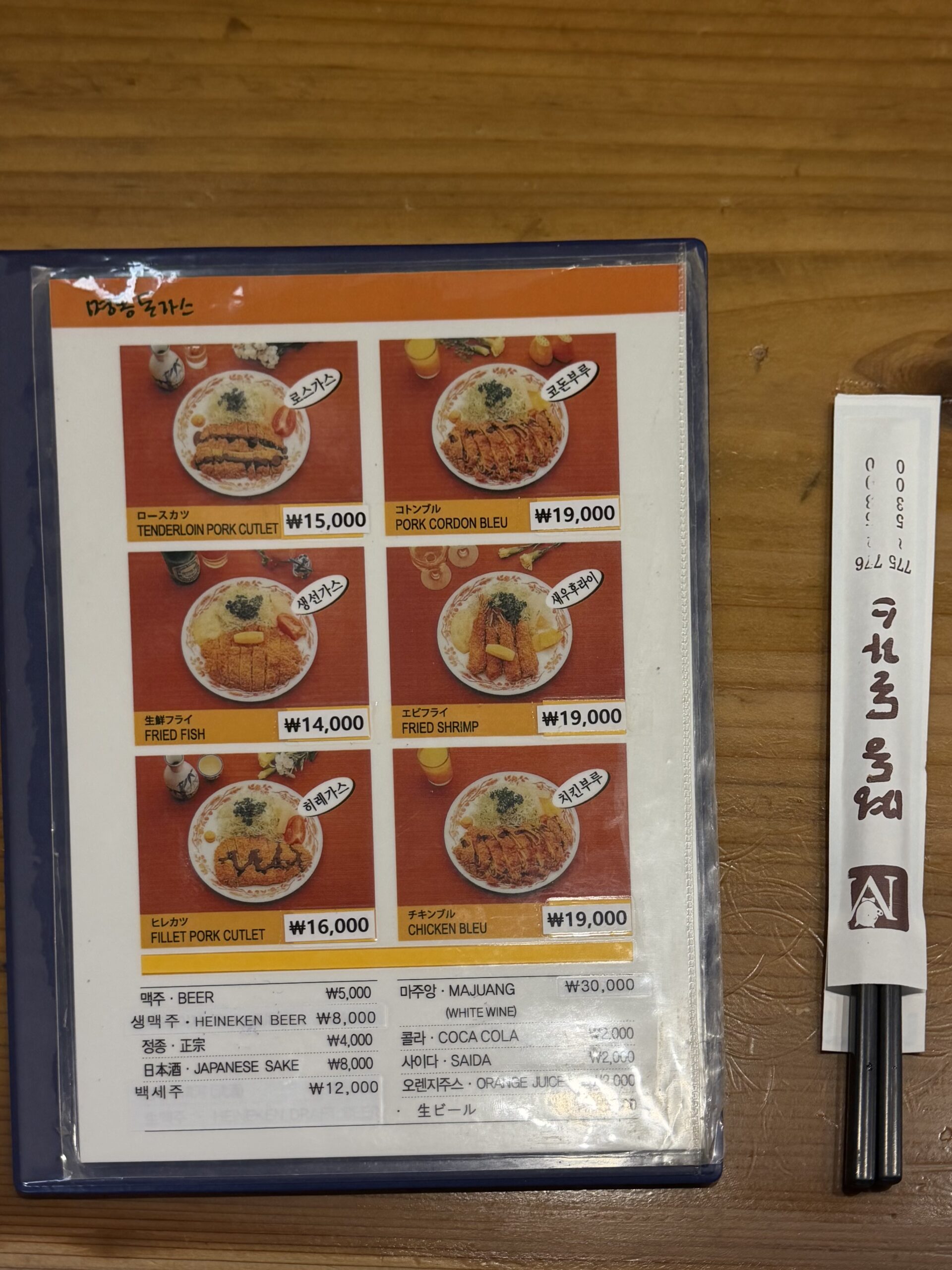
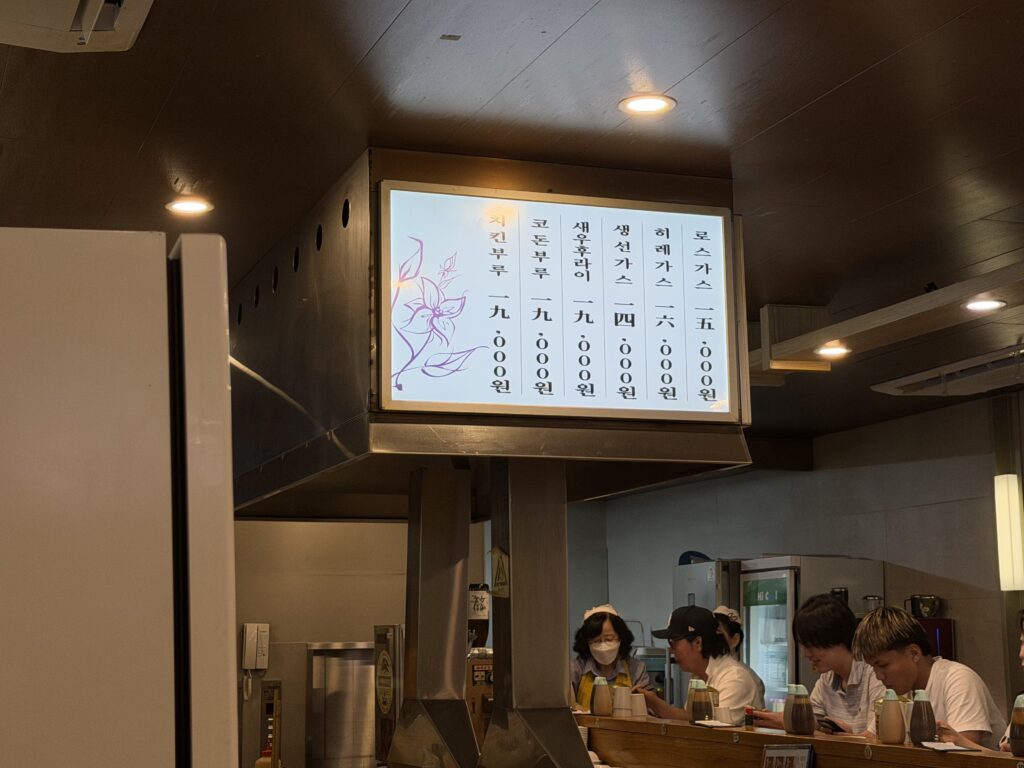
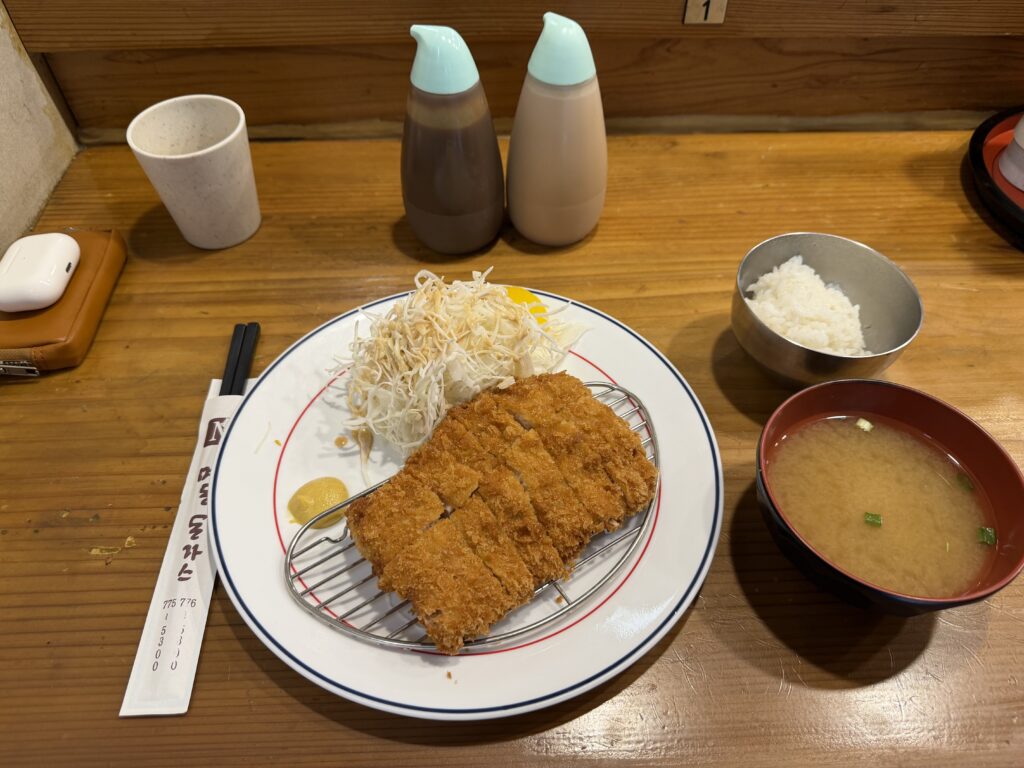
Do you know Myeongdong Tonkatsu? (You probably should)
Lunch was at Myeongdong Donkkaseu. You’ve probably heard of this place if you’ve looked up where to eat in Seoul. It’s been around since 1983, and unlike a lot of modern tonkatsu restaurants, they still serve the old-style Korean version. (The kind a lot of people grew up eating.)
I ordered the loin cutlet. It had a little more fat, which made it really juicy, while the coating stayed nice and crispy. It comes with rice, miso soup, and a cabbage salad on the side. There’s also a little bit of mustard on the plate. I wasn’t expecting much from it, but it actually works really well with the cutlet. The cabbage salad with sesame dressing is another must. It balances out the richness perfectly.
(I’m hungry again just writing this.)
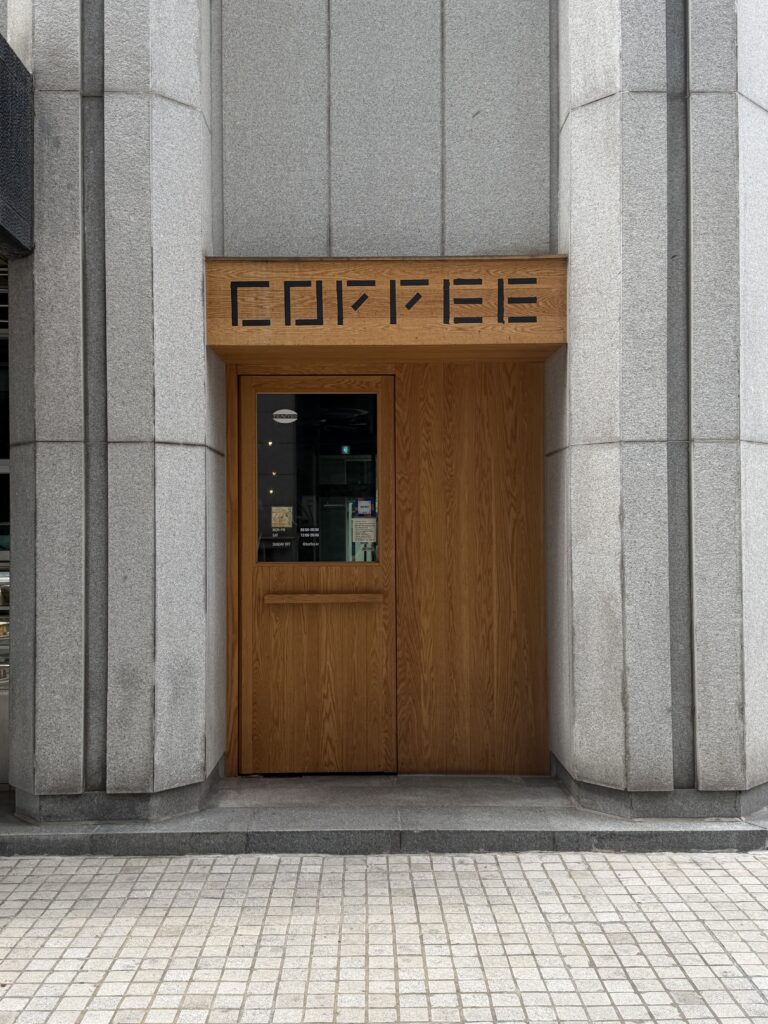
It says coffee. It’s actually TEAFFEE.
The sign says COFFEE. The name says TEAFFEE. So… which one is it? (Turns out it’s both.)
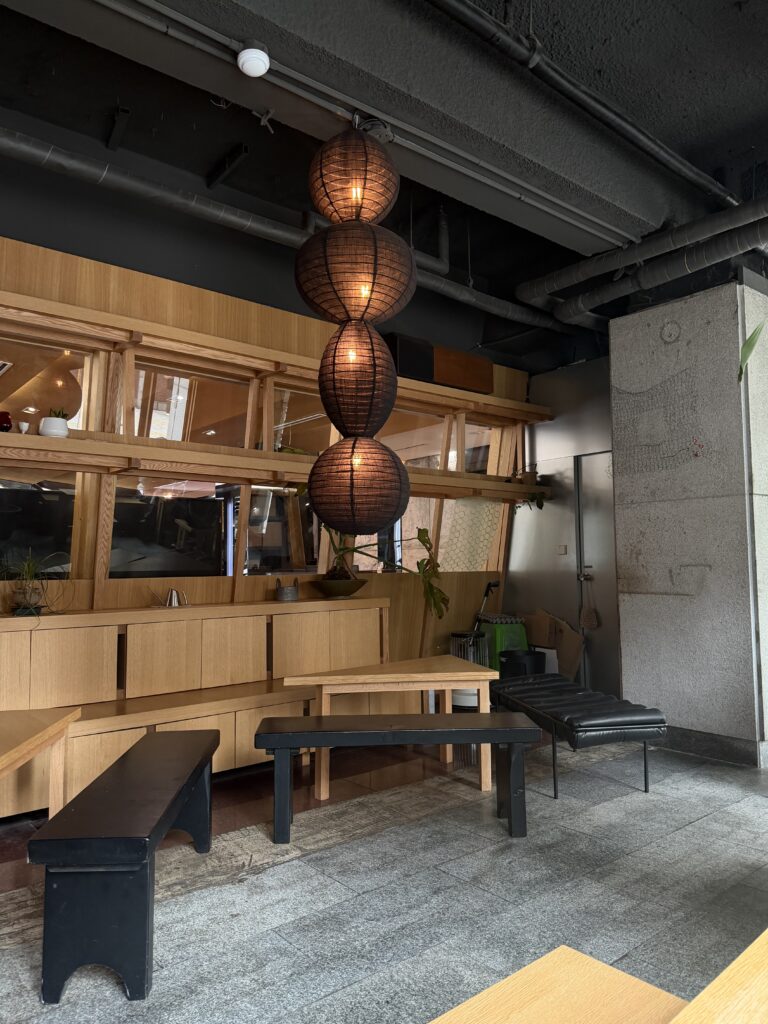
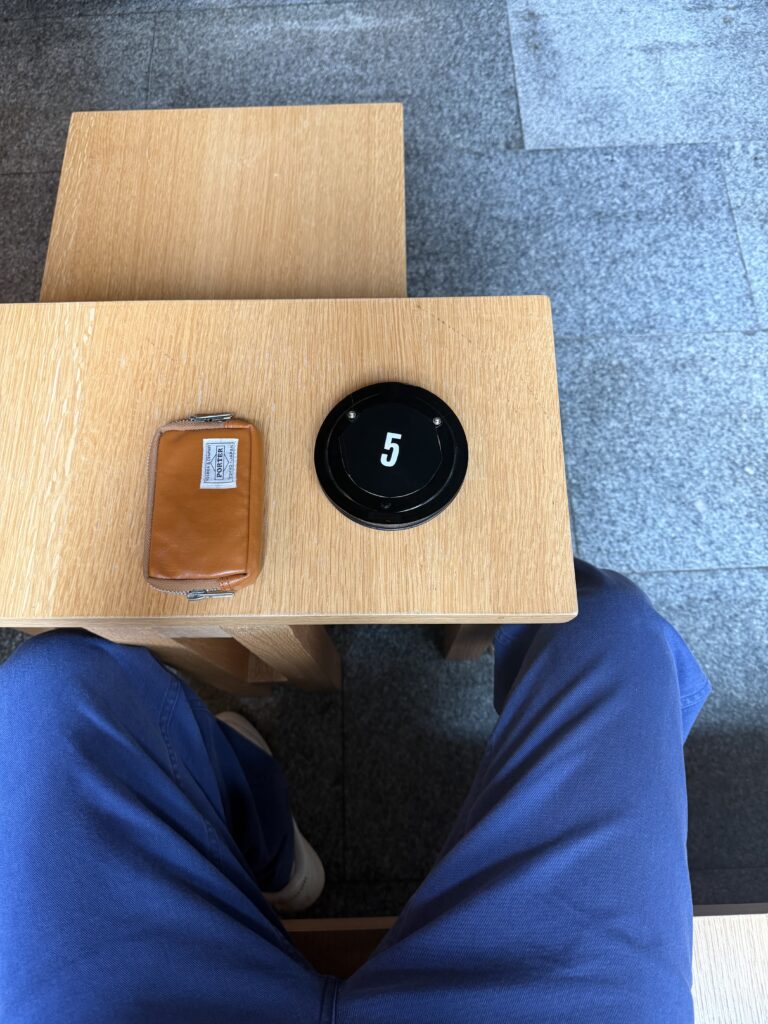
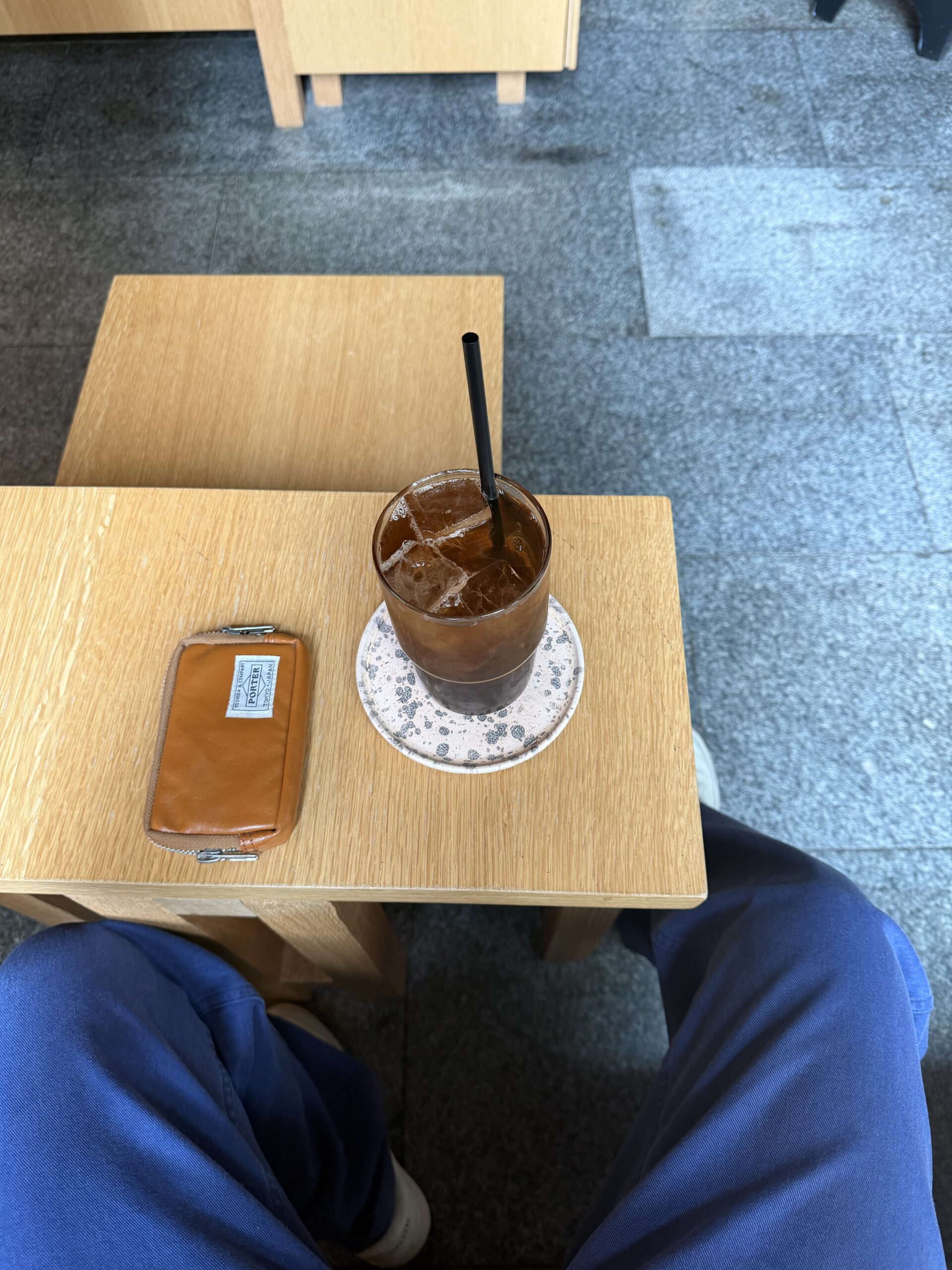
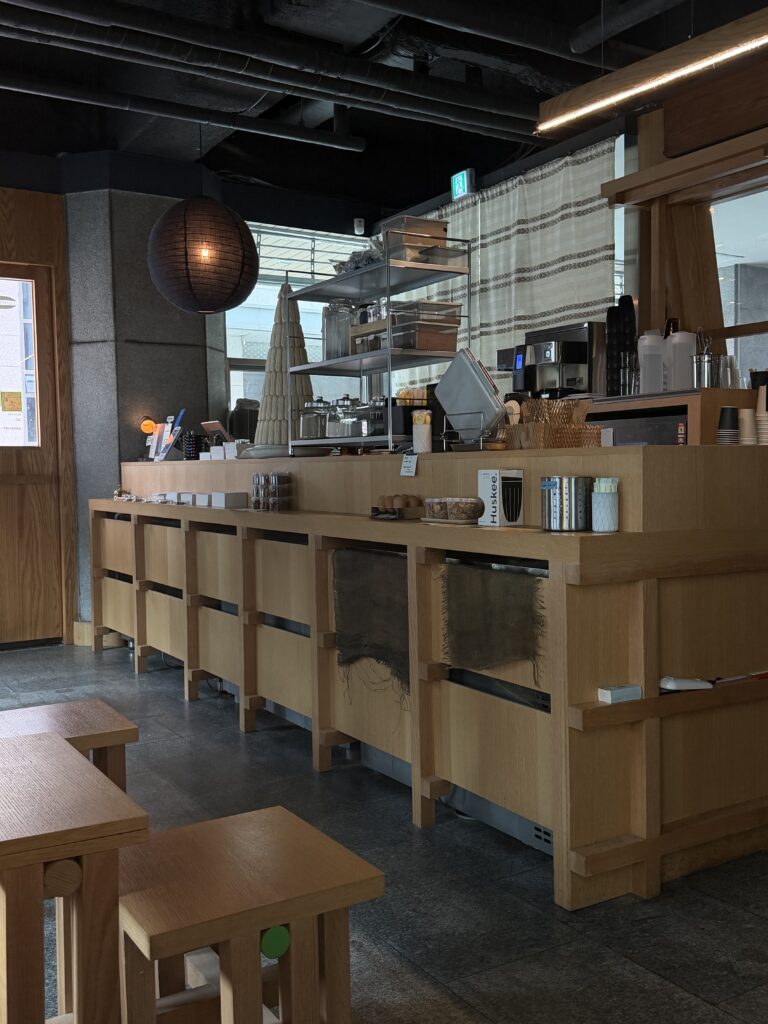
I ordered the Berry Tea-P. It had a lot more depth than a regular Americano. It reminded me of filter coffee, where you can really notice the different notes in the beans, but with tea layered into it as well. You get the flavors of both at the same time, which honestly felt pretty new to me. (In a good way.)
Next time I’m trying the mint one. Their Spanish omelette sandwich also looked really good. (If you get there before I do, let me know how it is.)
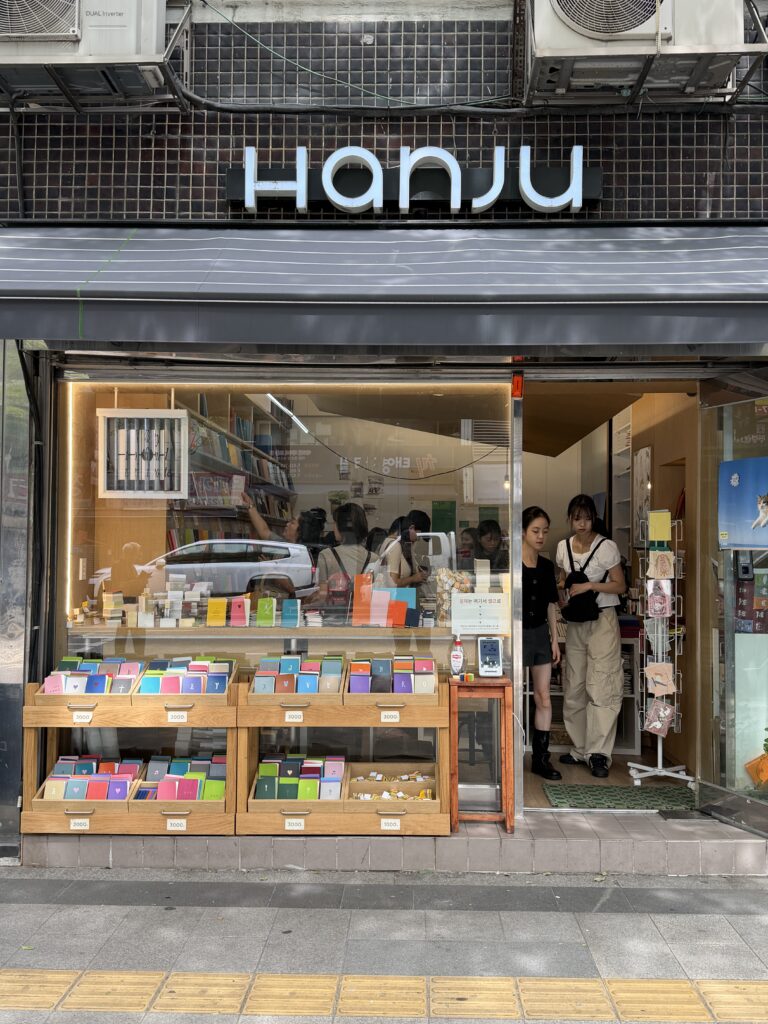
“Hanjoo” = one week.
This is Hanjoo, a stationery brand best known for its notebooks and planners. The name Hanjoo simply means “one week” in Korean.
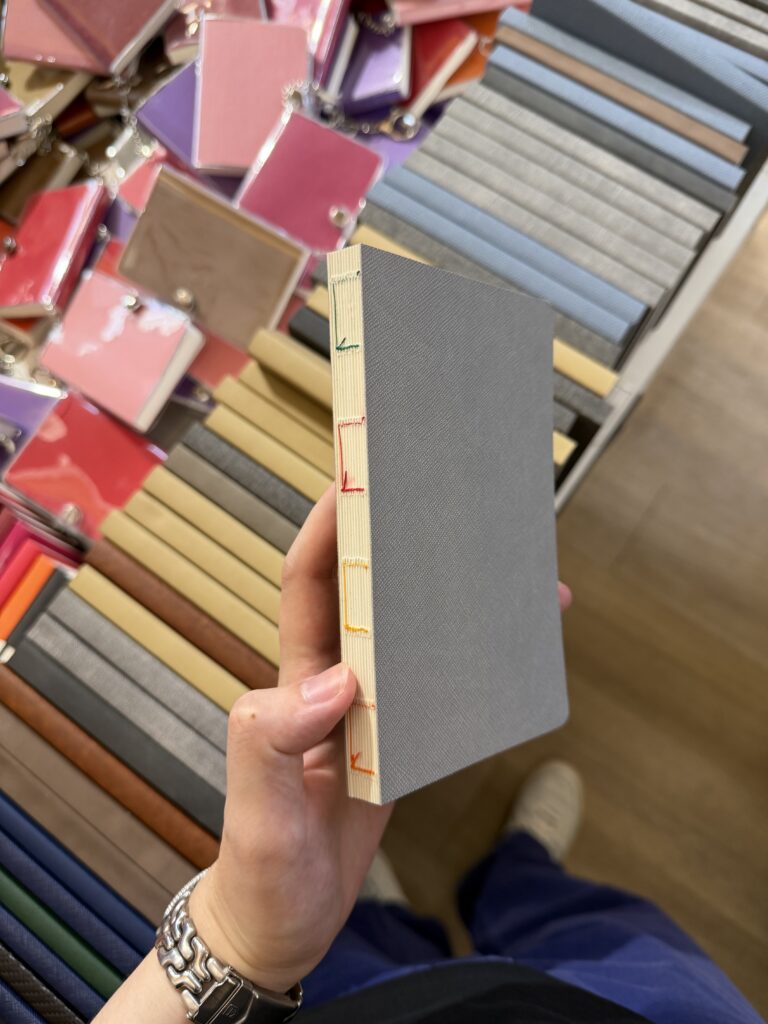
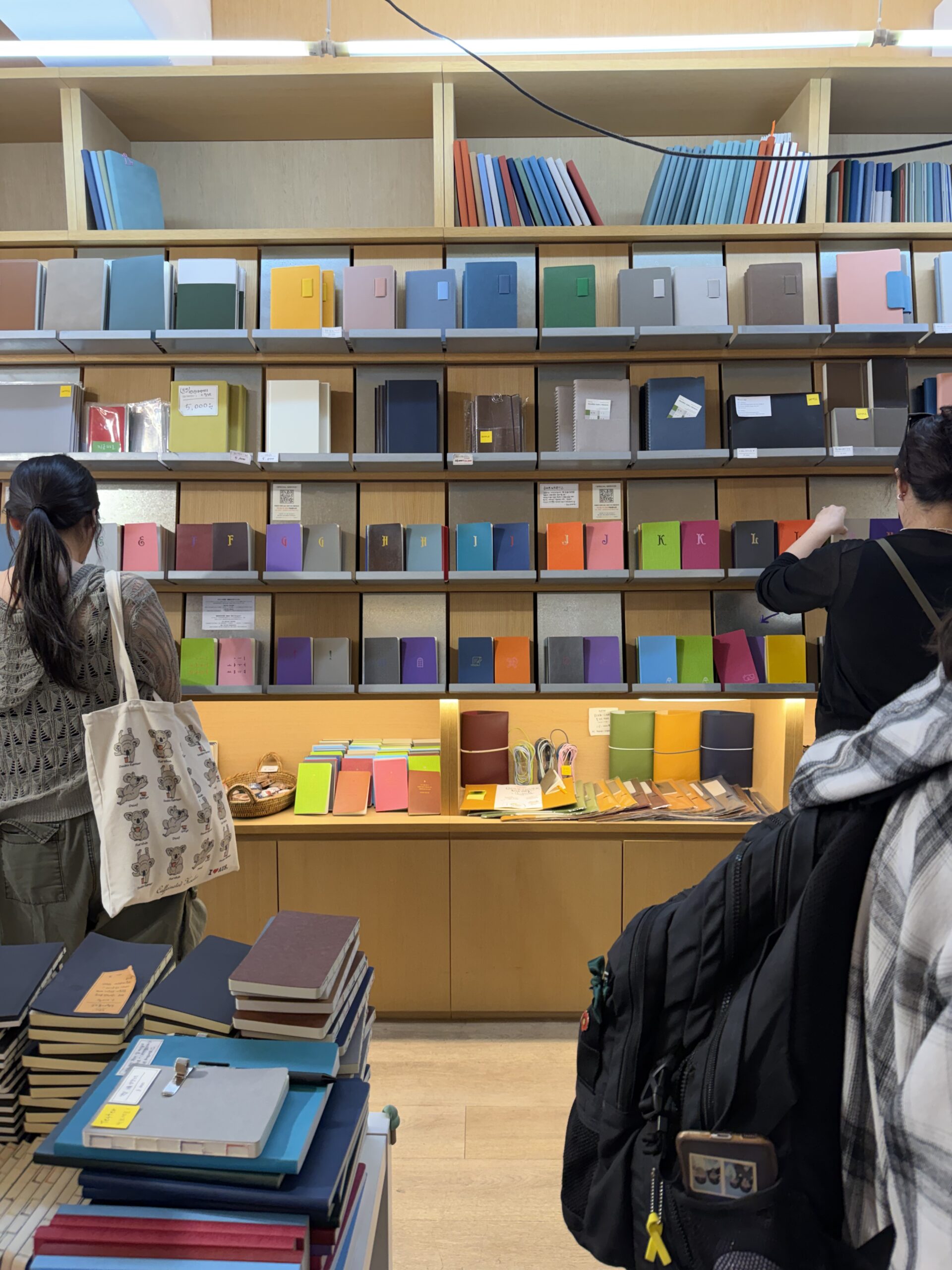
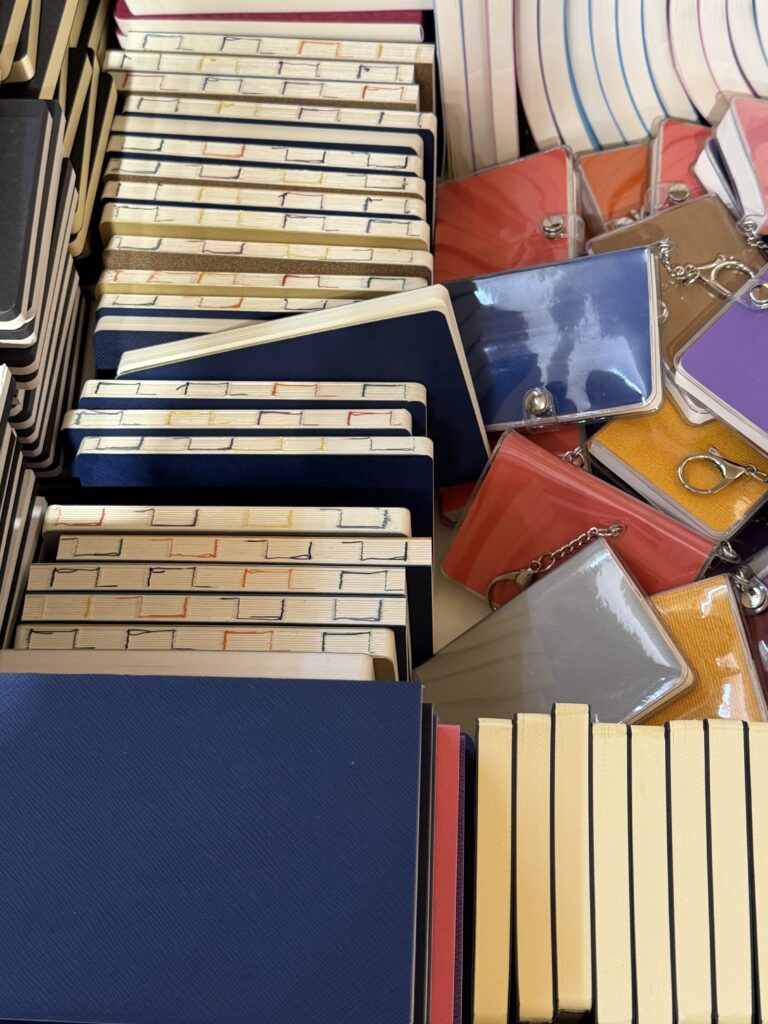
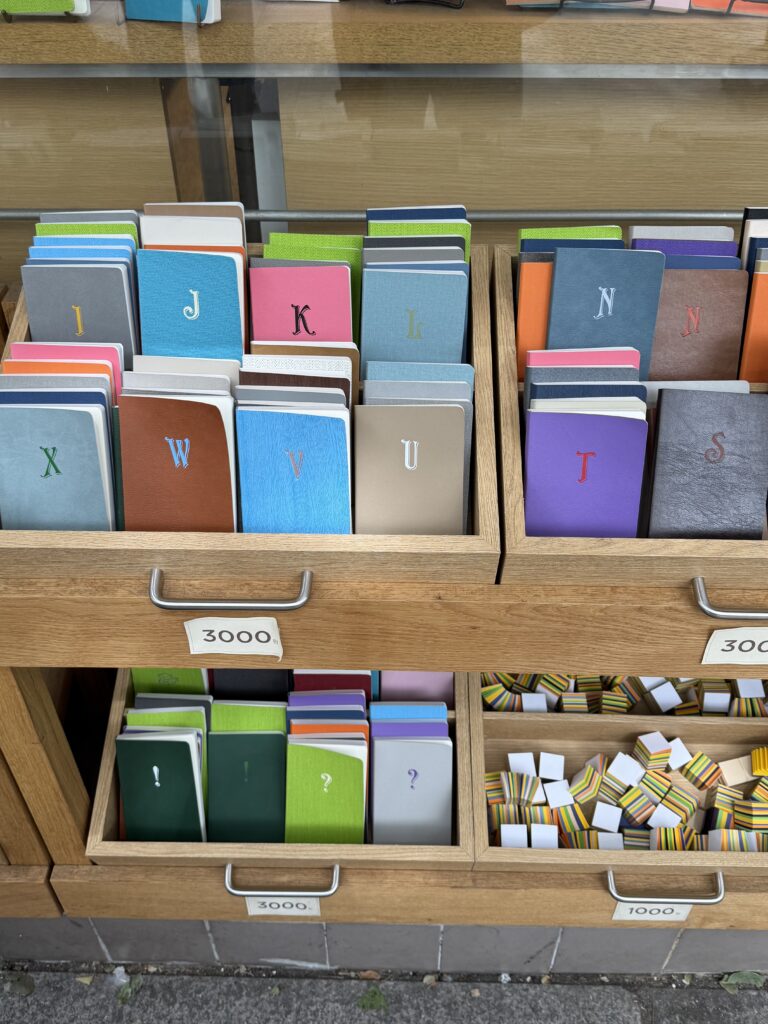
Couldn’t stop looking at the stitching.
Euljiro has long been known for its small printing workshops. If you wander through the back streets, you’ll find them everywhere. After the Korean War, the neighborhood became Seoul’s largest manufacturing district, with printing shops, metal workshops, and hardware stores all growing side by side.
Hanjoo began as a printing and bookbinding company back in 1985. For years, they mostly worked behind the scenes, printing for other businesses. In 2023, they opened this showroom in Euljiro, making the brand more accessible to the public. That’s one of the reasons I think this location feels so fitting. It all started here.
Unlike most stationery brands that begin with design, Hanjoo was built on craftsmanship first. I think that’s what makes it stand out. If you’re into stationery, I’d definitely add it to your list. (You don’t have to be a stationery person to enjoy it.)
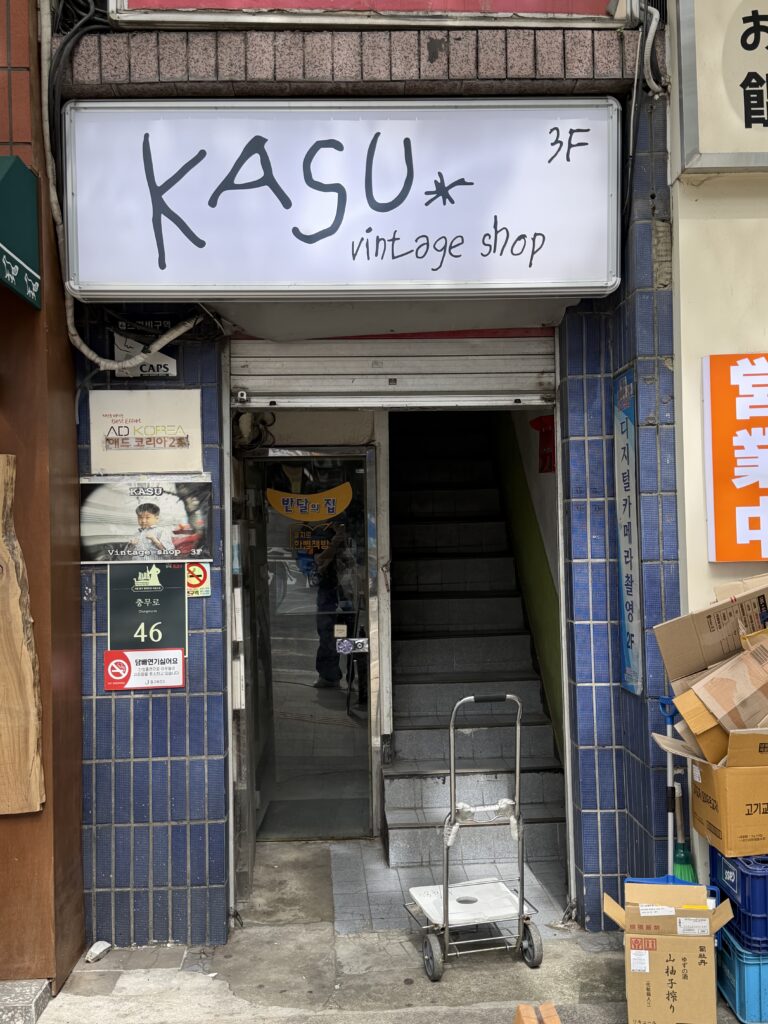
This is KASU, a vintage shop I found on Instagram. (Instagram got me again.)
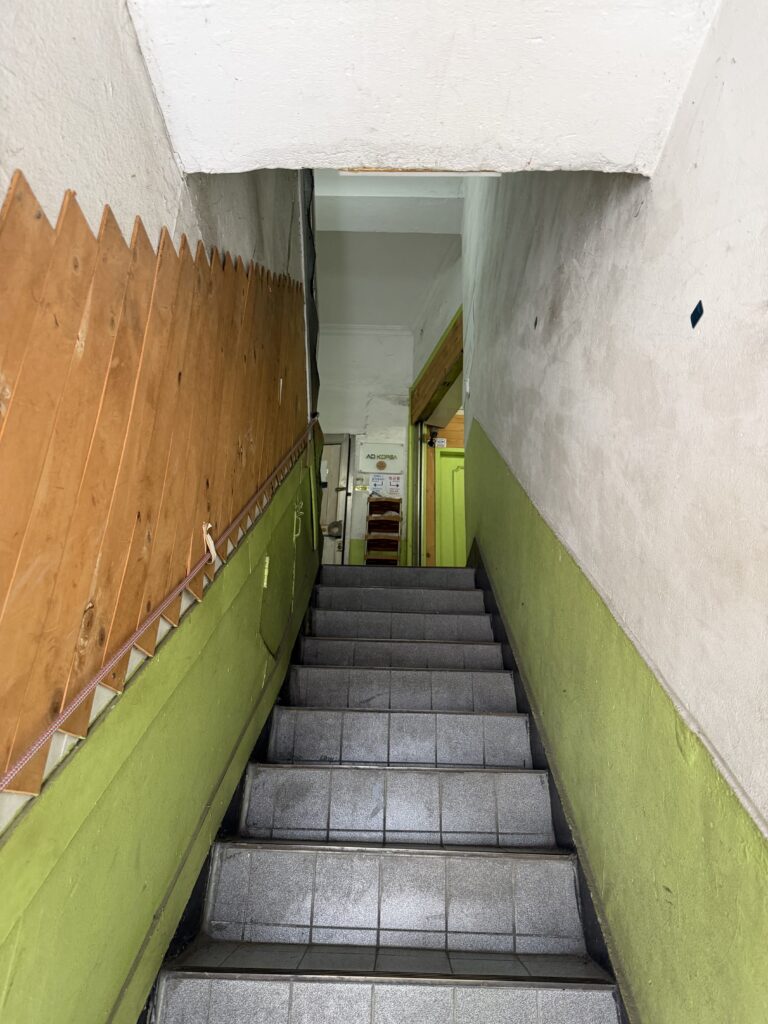
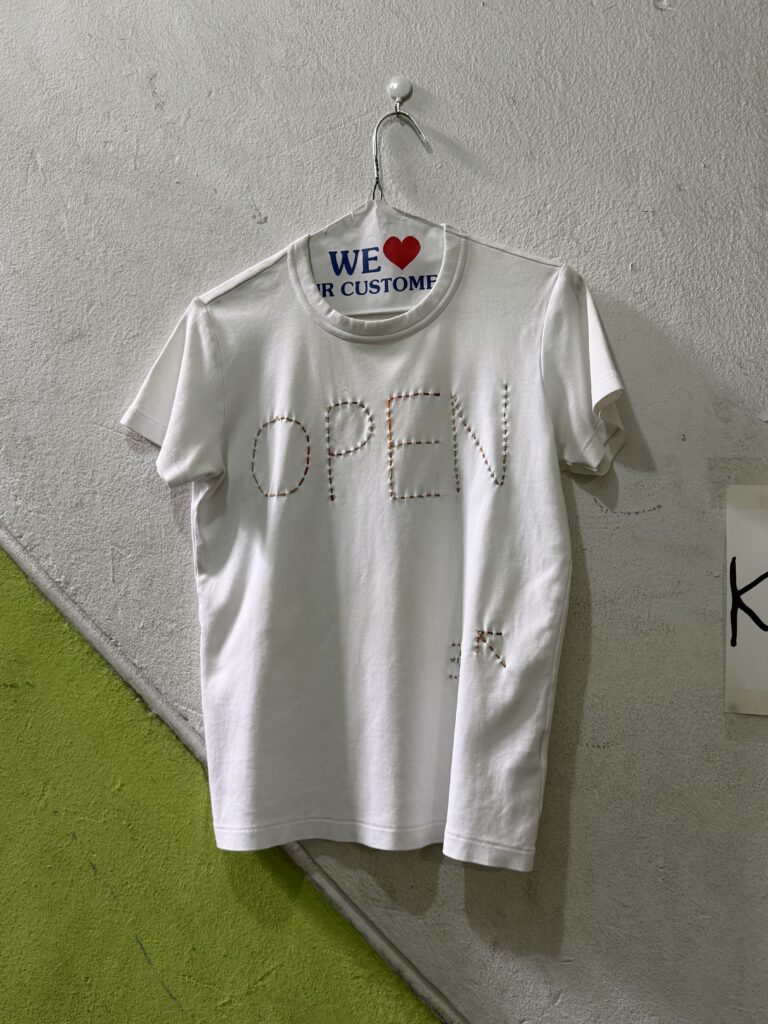
Climb the little staircase at the entrance…
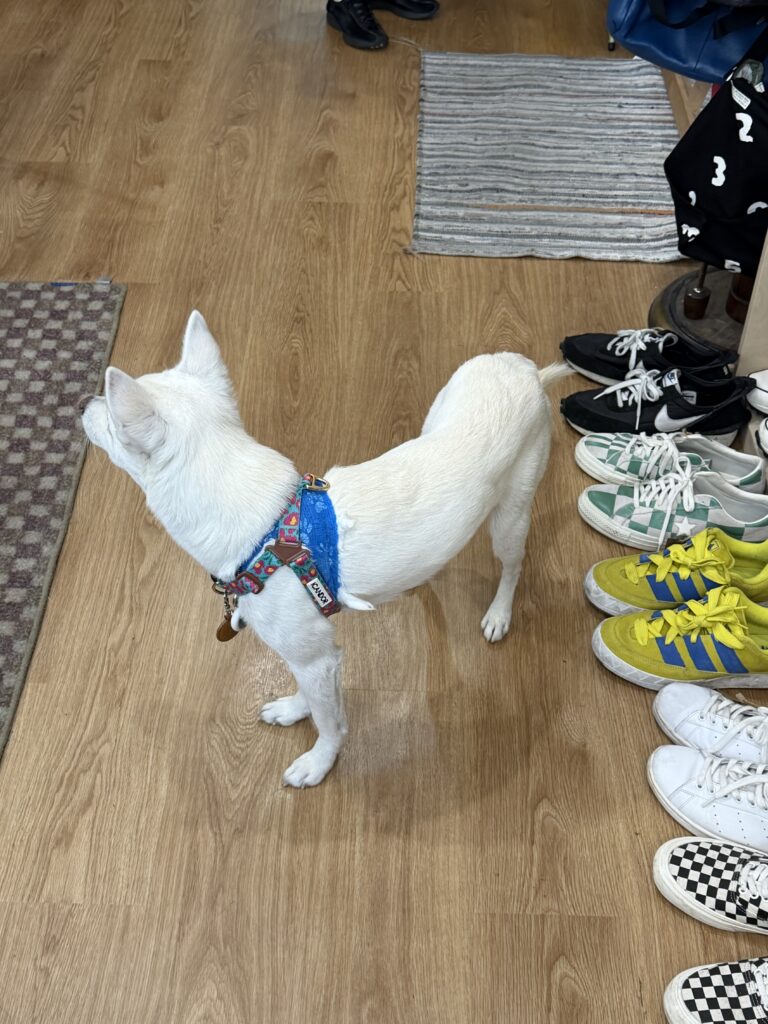
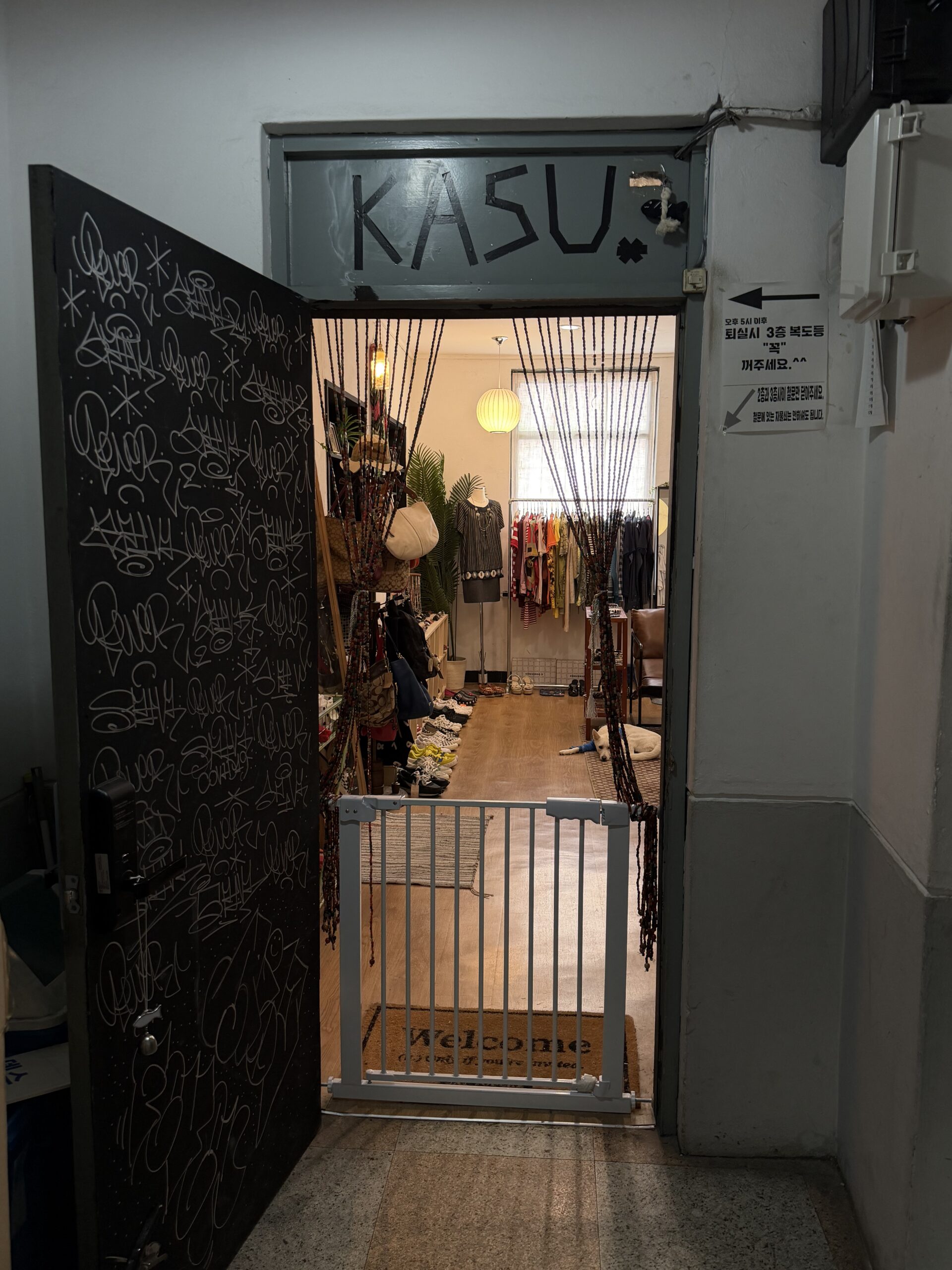
Now the little door makes sense.
…and you’re greeted by both the shop and the resident dog. 🙂 For a second, I couldn’t figure out why there were two doors. (Turns out one of them wasn’t for me.) After saying hello to the dog first, I headed inside.
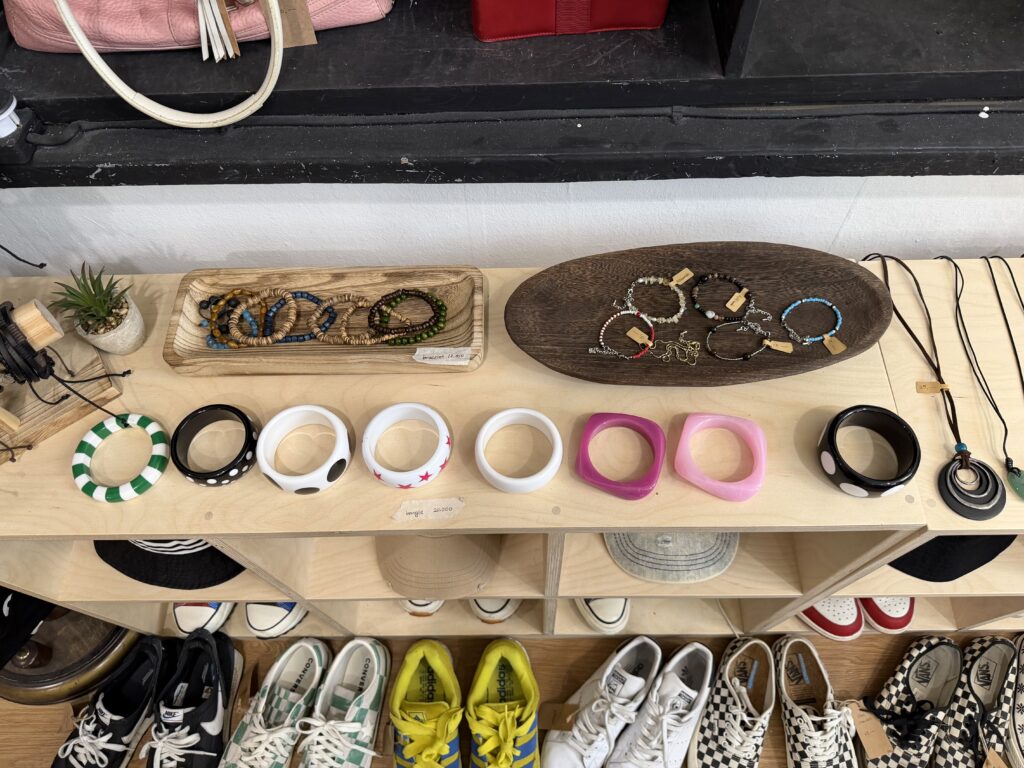
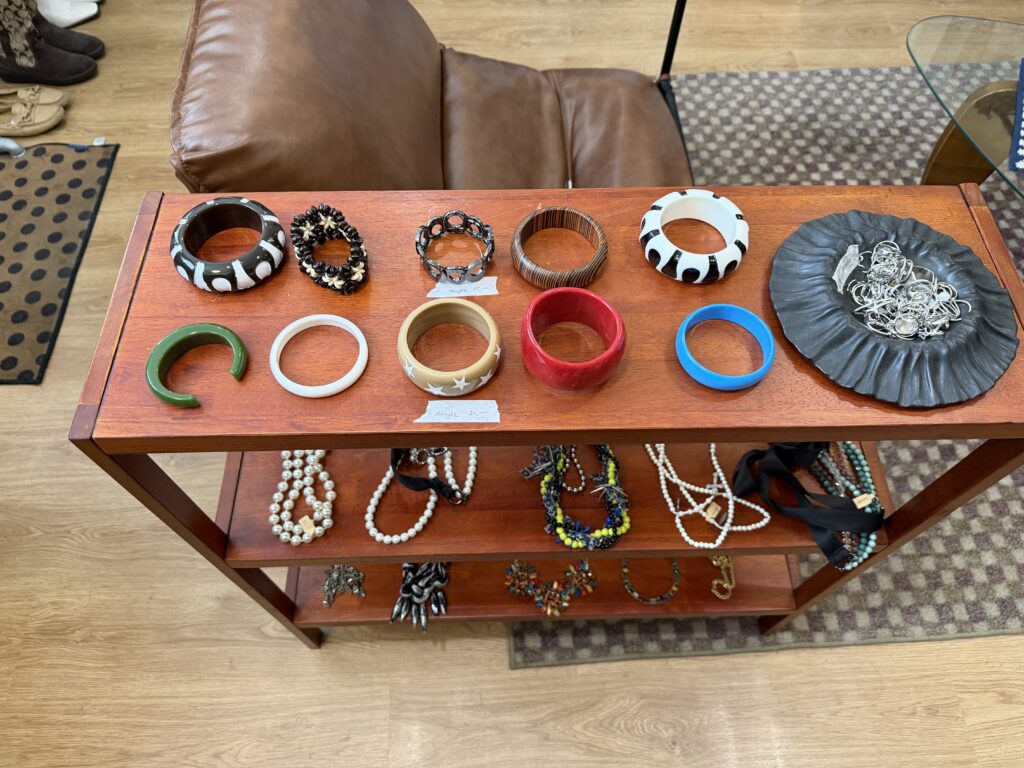
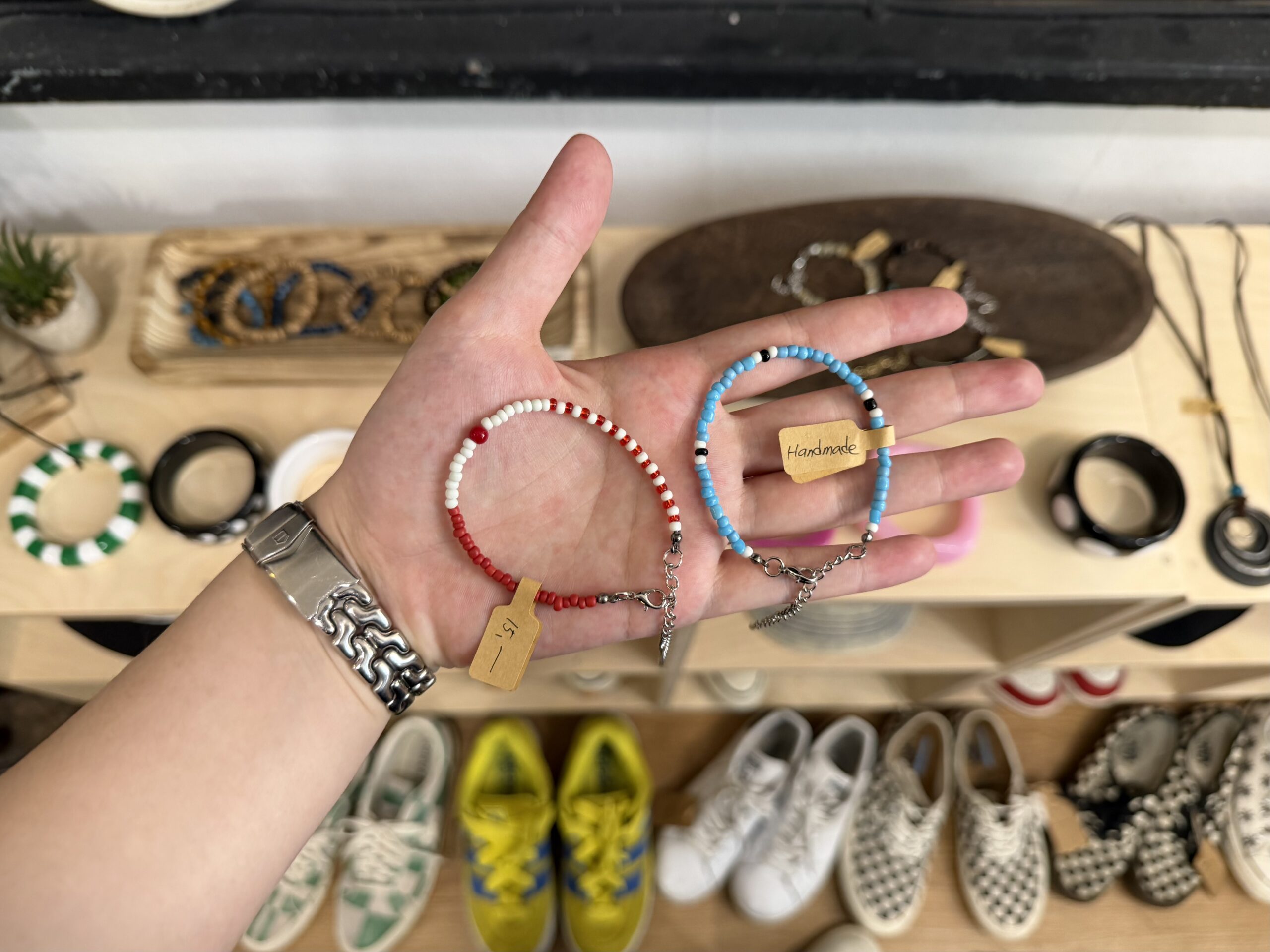
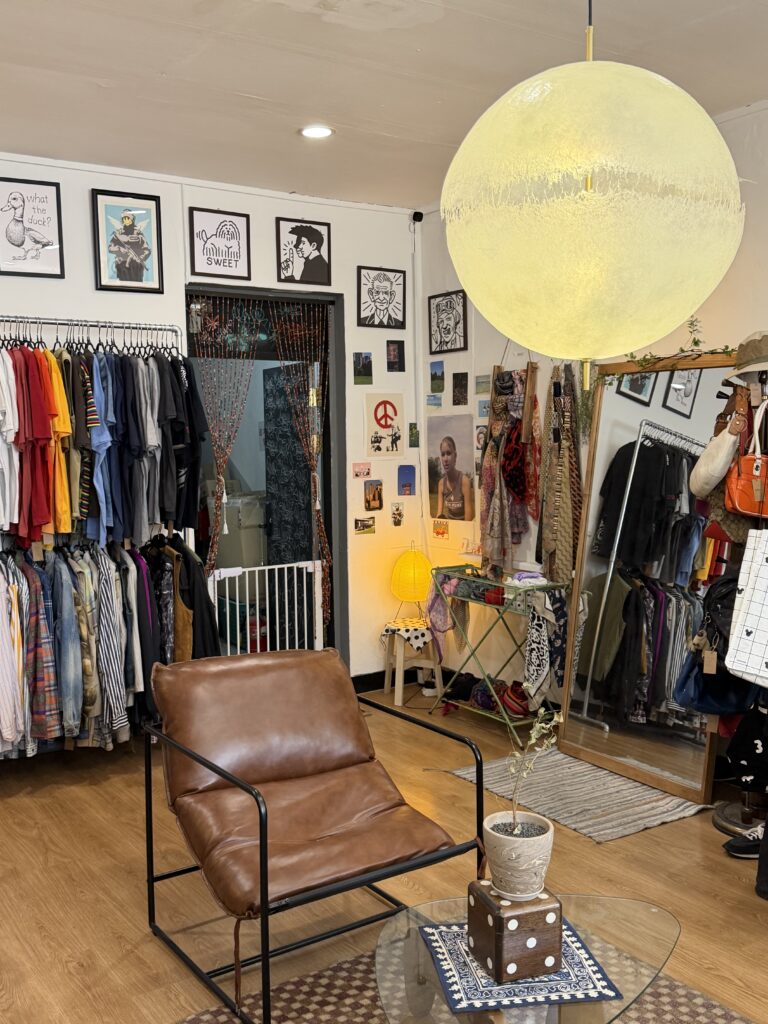
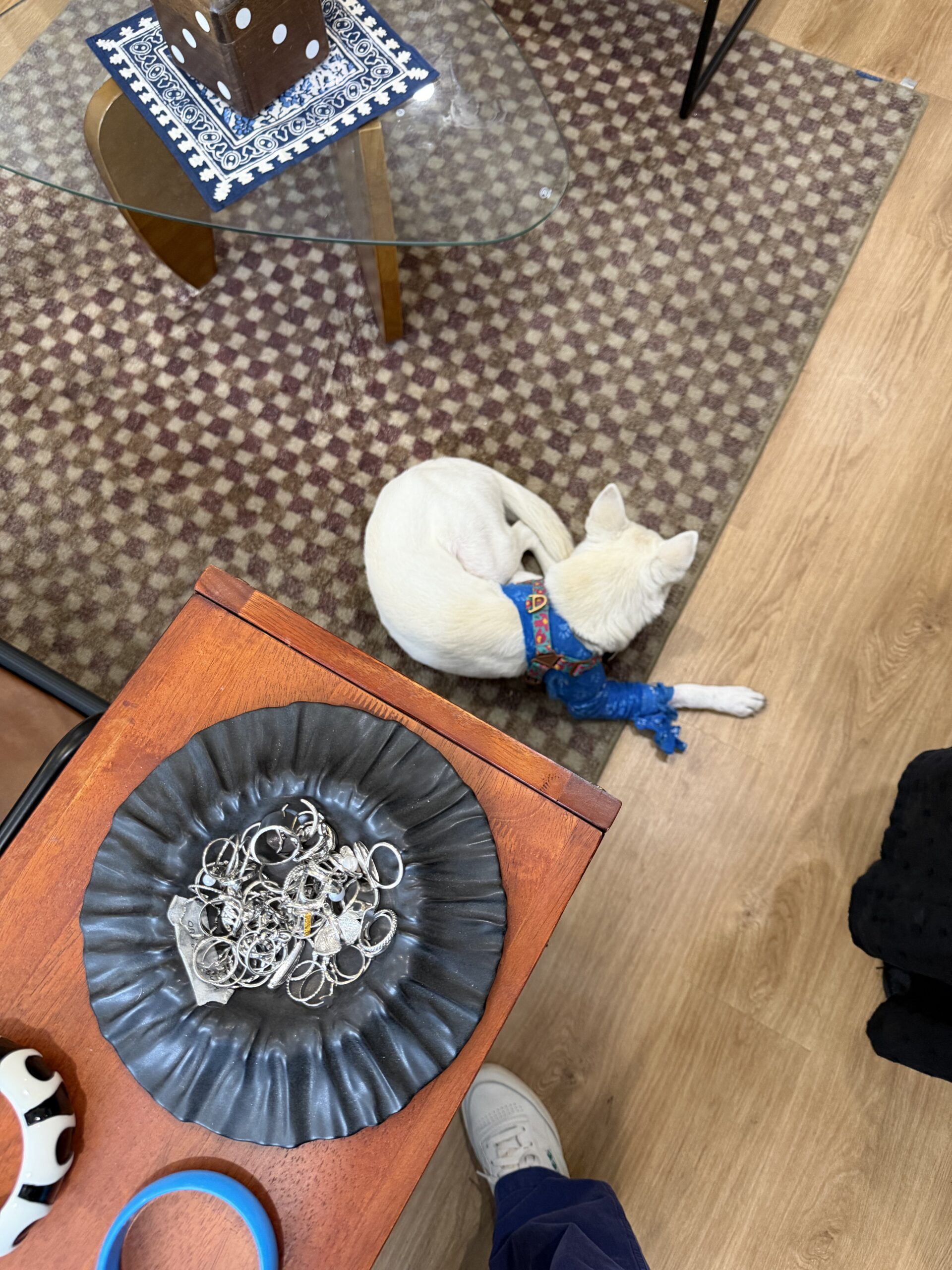
The shop is filled with vintage clothing, accessories, shoes, and all sorts of little finds. I originally came because I saw it on Instagram, but I ended up spending most of my time looking at the accessories. There were lots of bracelets, especially if you’re into chunky pieces or accessories that make a statement. Definitely worth a stop if that’s your style.
And lastly… The dog deserves five stars. (10/10 would visit again.) 🐶
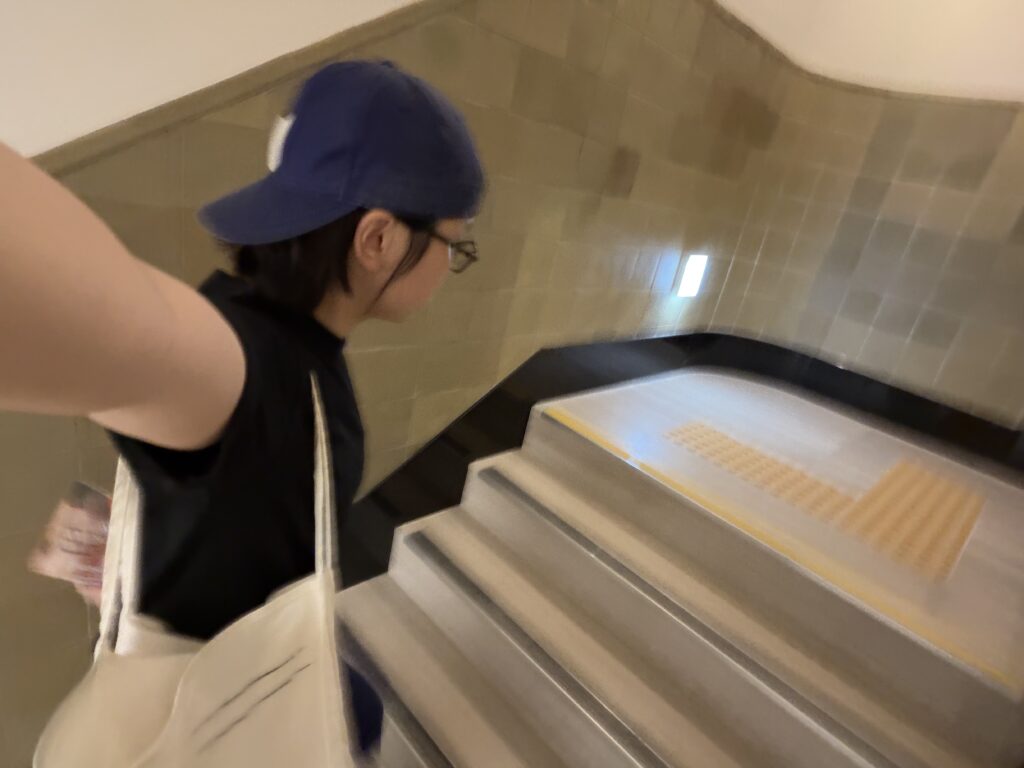
DM me if you’re curious.
And that’s a wrap on today’s Euljiro note. I only came for an exhibition, but somehow the day turned into a lot more than that. If you already know Euljiro, I hope you found a few new places to add to your list. If you didn’t, I hope now you know there’s a neighborhood like this waiting in Seoul. More than anything, I hope the things I share here always feel a little new, a little interesting, or maybe just worth slowing down for.
See you in the next episode.
안녕 (BYE)!

Leave a Reply